1d 16h 10m

Year-end rates end Sun 7 Dec

From Waste

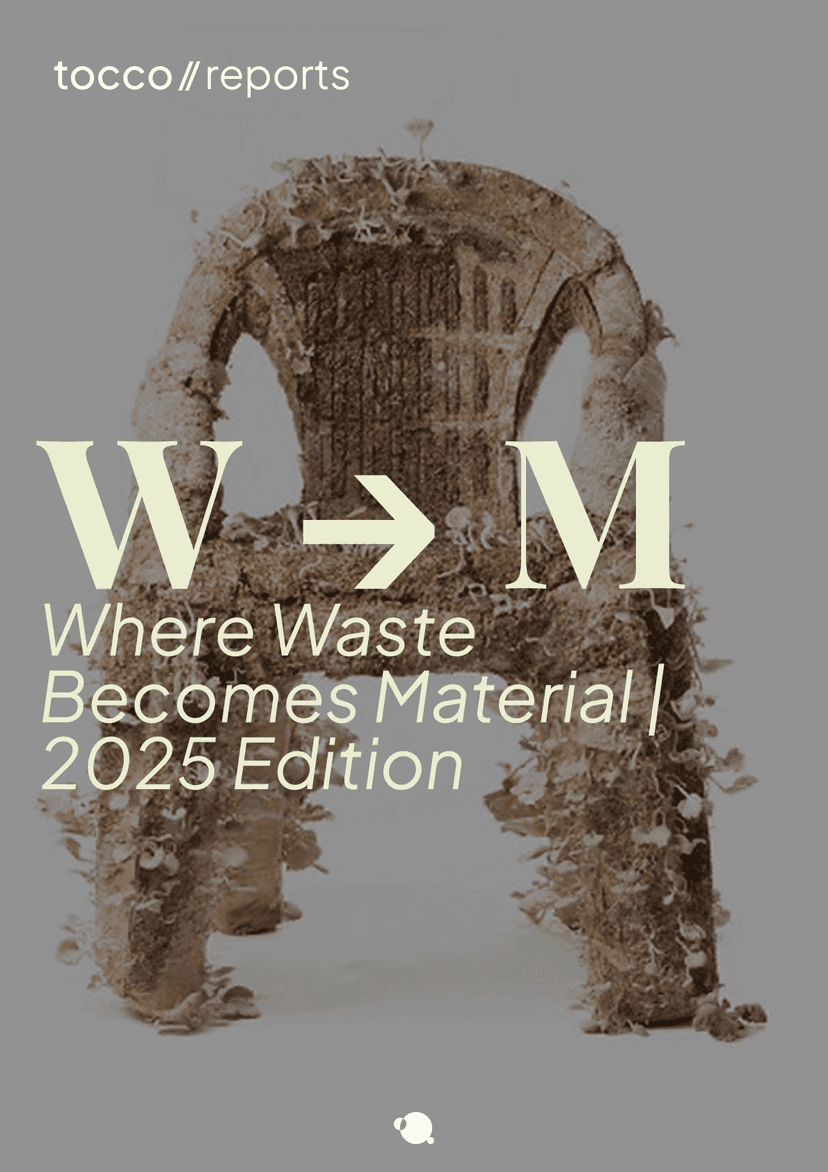
Tocco Report: W → M (Waste → Materials)

Where Waste Becomes Material, 2025-2026 Edition

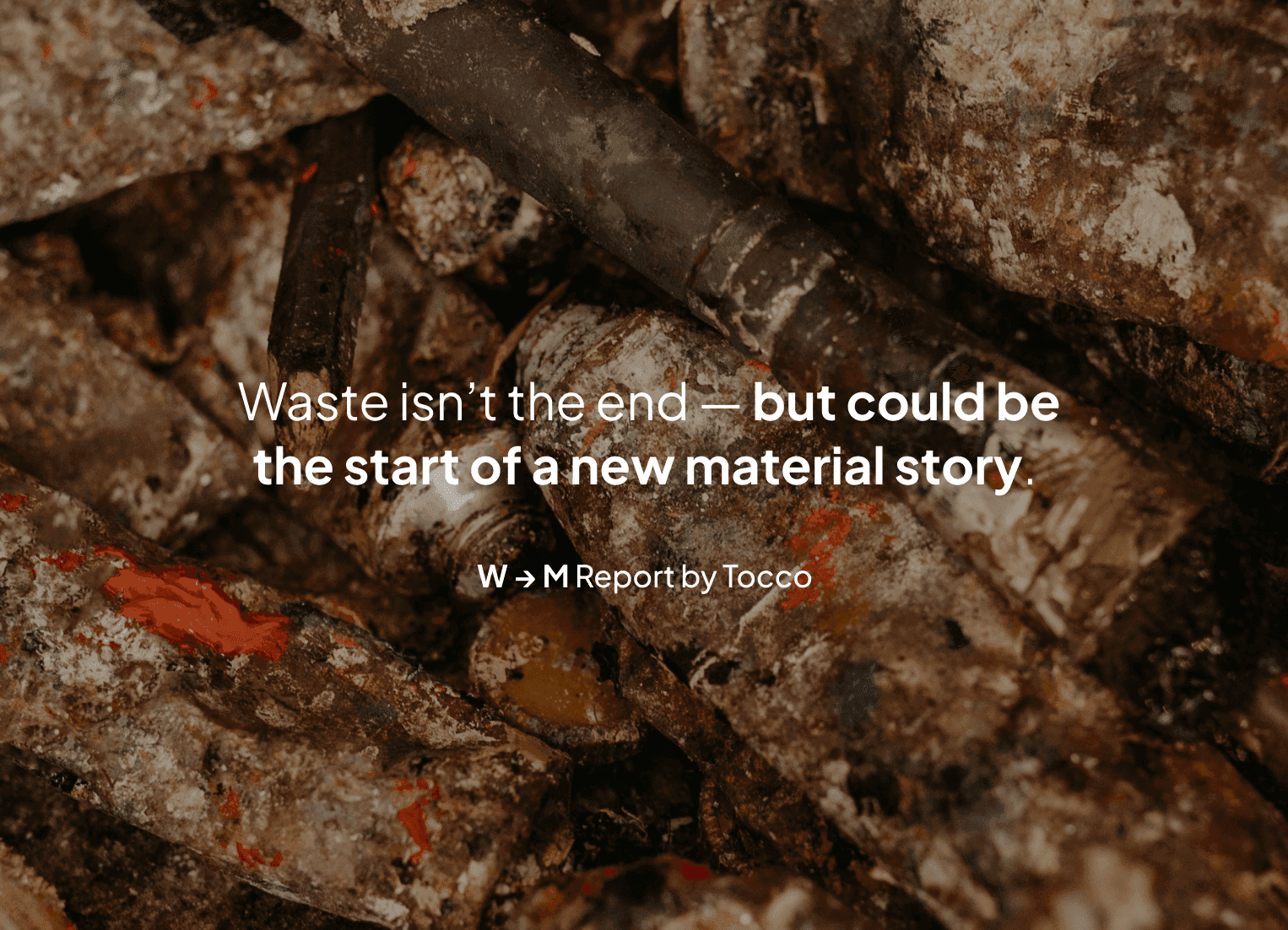
In recent years, the notion of “waste” has evolved from a discarded byproduct to a valuable input for innovative material development.

This report by Tocco team focuses on waste-based materials, distinct from related concepts such as recycled, bio-based, and greenwashed materials, to clarify the nuances critical to industry professionals and designers alike. We hope to help readers navigate the evolving landscape of waste-based materials with scientific rigor and practical clarity, equipping designers, engineers, buyers, and innovators to harness waste streams - responsibly and smartly.
Glues & Adhesives 2030 Edition Report Cover

Explore This Report

Start with the Free Version or unlock the Full Report with deeper insights, case studies, and extra content.

  1. Post-Consumer Plastics: New Lives for Plastic Waste
  2. Textile Waste: Closing the Loop on Fabrics
  3. Industrial & Manufacturing: Waste Reimagined as Raw Material
  4. Marine & Ocean Waste: Trawling Trash for Treasure
  5. Agricultural Waste: From Crop Residue to Raw Material
  6. Electronic Waste: Mining Tech Trash for Materials
  7. Glossary
Black rubber material

Materials in focus

Explore the innovative materials shaping the future
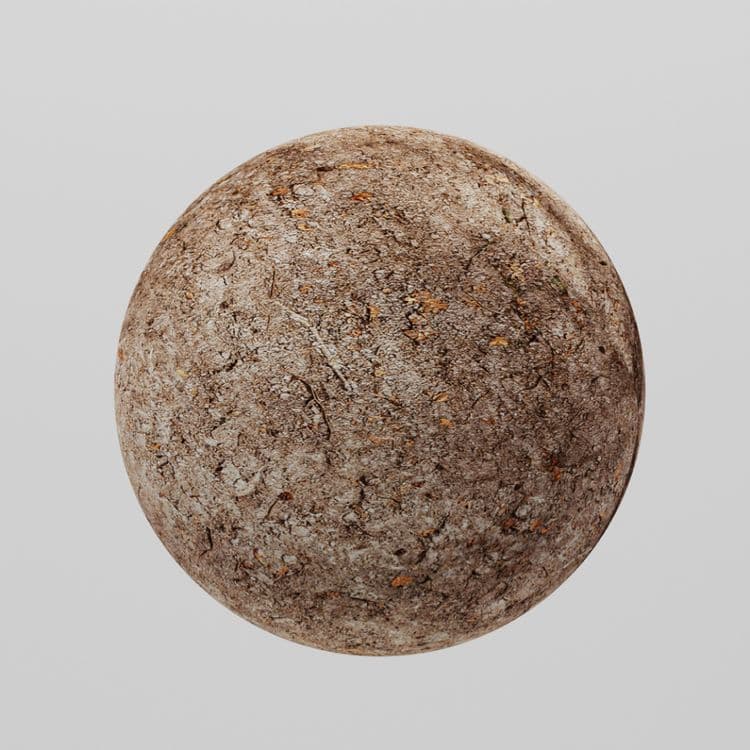
Biodegradable
Explore the evolving landscape of biodegradable materials with a focus on biodegradable plastics.

Biodegradable

Learn more
Recycled
Discover the benefits and challenges of recycled materials, as well as insights into how recycling transforms waste into valuable resources.

Recycled

Learn more
Bamboo
Introducing bamboo as an interesting alternative material. Learn about bamboo's incredible growth, and processing into textiles, paper, and construction materials.

Bamboo

Learn more
Mycelium
Get into the world of mycelium, and discover its applications and the potential it holds for revolutionizing packaging and product design.

Mycelium

Learn more
Silk
Discover the intricate world of silk, its rich history, production processes, and its ethical alternatives.

Silk

Learn more
Upcycled
A deep dive into upcycled materials, examining their pros and cons

Upcycled

Learn more
Cotton
Learn about cotton, the world's most used natural fibers, its environmental aspects and its significance in the global textile industry

Cotton

Learn more
Linen
Dive into the rich history and versatile applications of linen, and understand why linen remains a timeless and eco-friendly choice in the world of natural fabrics.

Linen

Learn more
Latex
Explore the world of latex, where we compare the properties, uses, and environmental impacts of natural and synthetic latex.

Latex

Learn more
Bioplastic
Dive into the world of bioplastics and their role in sustainable development, and understand the benefits and challenges of bioplastics to replace petroleum-based plastics

Bioplastic

Learn more
Hemp
Discover hemp and learn about its production from plant to fabric and its wide-ranging applications in textiles, construction, and beyond.

Hemp

Learn more
Leather
Explore the world of leather and its alternatives. From plant-based options to synthetic varieties, learn about technological advancements shaping the future of leather.

Leather

Learn more
Jute
Discover the versatile world of jute, its origin, cultivation, and its role in the global textile industry.

Jute

Learn more
Banana Fibre
Discover the unique and sustainable world of banana fibre, and learn about the process of extracting fibre from banana plants.

Banana Fibre

Learn more
Wool
Explore the world of wool and the latest innovations in wool alternatives, especially plant-based, cruelty-free options.

Wool

Learn more
Fur
Explore the history, environmental impact, and ethical considerations of fur in fashion - and discover alternatives like faux fur, wool fur, and lab-grown options.

Fur

Learn more
Sisal
A deep dive into sisal, its origins, cultivation, and environmental benefits.

Sisal

Learn more

What's inside?

AltMat converts agricultural waste like hemp stalks, pineapple leaves, banana stems, and kenaf fibers into useful textile fibers. Essentially, they create natural fiber textiles from what is often burned or left to rot. This is partly a bio-based material story, but also one of waste valorization (e.g. pineapple leaf fiber Piñatex saves pineapple leaf burning in plantations). These fibers can displace some cotton or synthetics.
something

AltMat converts agricultural waste like hemp stalks, pineapple leaves, banana stems, and kenaf fibers into useful textile fibers. Essentially, they create natural fiber textiles from what is often burned or left to rot. This is partly a bio-based material story, but also one of waste valorization (e.g. pineapple leaf fiber Piñatex saves pineapple leaf burning in plantations). These fibers can displace some cotton or synthetics.

Other Available Reports

Expand your knowledge with our curated collection of industry-leading insights

Latest Design Stories

Weekly highlights from our community of innovators and pioneers